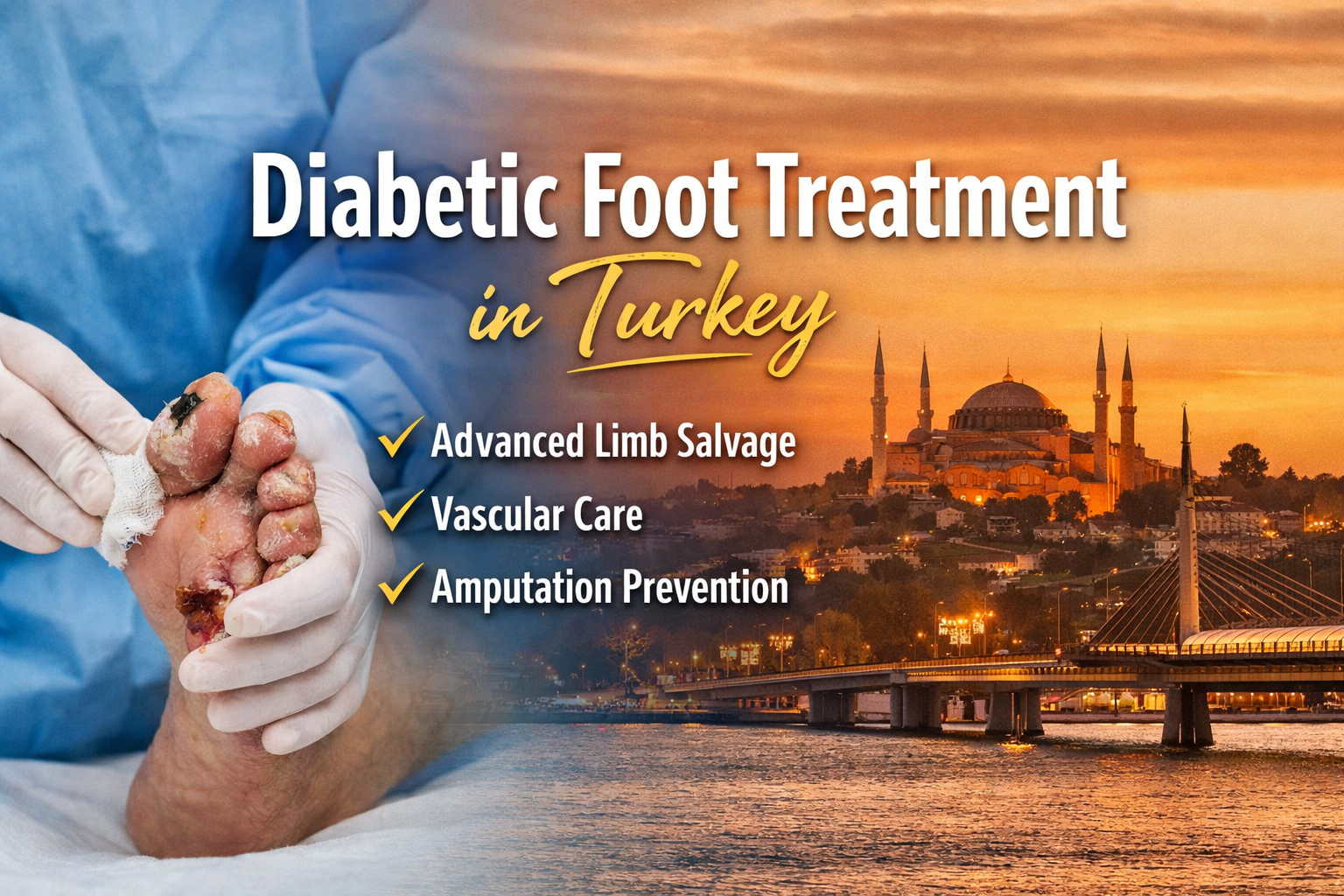
Diabetic foot (also called diabetic foot ulcer) is a serious complication of diabetes that can lead to chronic wounds, infection, tissue loss, and in advanced cases, amputation. For many patients, the condition develops silently—especially when nerve damage reduces pain sensation—until a small blister or crack turns into a deep, non-healing ulcer.
In Turkey, diabetic foot care has become increasingly structured around a limb-salvage philosophy: detect risk early, control infection fast, and—most importantly—restore blood flow when circulation is compromised. This approach is critical because even the best dressings and antibiotics may not heal an ulcer if the foot does not receive enough oxygen and nutrients through adequate circulation.
At Istanbul Vein Center, diabetic foot management is built around vascular evaluation and advanced interventions when needed. The goal is clear: heal the wound, stop infection, improve mobility, and prevent amputation.
Why Diabetic Foot Ulcers Happen
Diabetic foot ulcers typically occur due to a combination of three major factors:
Diabetic Neuropathy (Loss of Sensation)
Over time, elevated blood sugar can damage peripheral nerves. As sensation decreases, patients may not notice:
- small cuts, cracks, or burns
- shoe pressure points
- blisters or minor trauma
Because pain signals are reduced, wounds can worsen before treatment begins.
Poor Blood Circulation (Peripheral Arterial Disease)
A frequent root cause of non-healing diabetic ulcers is insufficient arterial blood flow to the lower limb. This may be due to narrowed or blocked arteries. When circulation is impaired:
- wounds heal slowly or not at all
- infection risk increases
- tissue can become necrotic (gangrene)
This is why a vascular-first evaluation is so important in modern diabetic foot care.
Infection and Biofilm Formation
Once a wound is open, bacteria can enter. In diabetic patients, immune response may be weaker and healing slower, so infections can escalate quickly—sometimes reaching bone (osteomyelitis). This can dramatically increase the risk of hospitalization and amputation if not managed aggressively.
Symptoms and Warning Signs of Diabetic Foot
Diabetic foot often develops gradually, and many patients do not recognize the severity of the condition until it reaches an advanced stage. Recognizing early warning signs is critical to prevent complications such as deep infection or amputation.
Common symptoms of diabetic foot include:
- Non-healing wounds or ulcers on the foot or toes
- Redness, swelling, or localized warmth
- Drainage or pus from a wound
- Darkening of skin or tissue discoloration
- Foul odor coming from the ulcer
- Loss of sensation, tingling, or numbness
- Foot pain at rest (in patients with advanced circulation problems)
In some cases, patients may not feel pain at all, even when a serious infection is present. This makes regular foot inspection and professional evaluation essential for diabetic individuals.
At Istanbul Vein Center, patients are encouraged to seek immediate evaluation if a wound does not show clear signs of healing within 10–14 days, especially if diabetes is present.
How Diabetic Foot Is Diagnosed
Successful diabetic foot treatment begins with accurate diagnosis. Treating only the surface wound without understanding the underlying cause—especially blood flow—often leads to recurrence or progression.
Clinical Examination
The first step involves a detailed assessment of:
- Wound size, depth, and location
- Signs of infection
- Skin temperature and color
- Sensory loss due to neuropathy
- Vascular Evaluation (Key Step)
Because poor circulation is a major reason why diabetic foot ulcers do not heal, vascular assessment is central to the diagnostic process.
This evaluation focuses on:
- Detecting arterial narrowing or blockages
- Assessing blood supply to the foot and toes
- Determining whether revascularization is required
Without restoring circulation, even advanced wound care techniques may fail.
Imaging and Advanced Assessment
When necessary, further diagnostic tools may be used to:
- Map arterial flow in the lower extremities
- Identify critical ischemia
- Evaluate the extent of tissue damage
Under the supervision of Prof. Dr. Ahmet Arnaz, diagnostic findings are translated into a clear, staged treatment plan with a strong focus on limb preservation.
Stages of Diabetic Foot (Severity Classification)
Understanding the stage of diabetic foot disease is essential for selecting the correct treatment strategy and estimating healing potential. Diabetic foot is not a single condition but a progressive disease, ranging from mild skin breakdown to life-threatening infection and gangrene.
Stage 1 — High-Risk Foot (No Open Wound)
At this stage, there may be:
- Loss of protective sensation
- Dry skin, calluses, or foot deformities
- Reduced circulation without visible ulcers
Although no open wound is present, the risk of ulcer formation is high. Preventive care and circulation assessment are crucial.
Stage 2 — Superficial Ulcer
This stage involves:
- Open skin wounds
- Limited depth (skin and subcutaneous tissue)
- Minimal or no infection
With early intervention and proper circulation, healing potential is high.
Stage 3 — Deep Ulcer with Infection
At this stage:
- The ulcer extends to muscle, tendon, or bone
- Infection is present
- Swelling, drainage, and odor may occur
Without aggressive treatment, the condition can rapidly worsen.
Stage 4 — Critical Ischemia and Tissue Loss
This advanced stage includes:
- Severe lack of blood flow
- Necrotic tissue or gangrene
- Constant pain or complete numbness
At this point, vascular intervention becomes urgent to prevent major amputation.
At Istanbul Vein Center, staging is not only descriptive—it directly determines whether revascularization, wound care, or combined treatment is required.
Diabetic Foot Treatment Approach at Istanbul Vein Center
Diabetic foot treatment is most successful when it follows a structured, step-by-step strategy rather than isolated wound care. The treatment philosophy at Istanbul Vein Center is centered on limb preservation and long-term healing.
Step One: Identifying the Root Cause
Every patient undergoes a comprehensive evaluation to determine:
- Whether blood circulation is sufficient
- The severity of arterial disease
- The presence and extent of infection
Treating the wound without correcting the underlying cause often leads to recurrence or deterioration.
Step Two: Restoring Blood Flow (When Needed)
In patients with impaired circulation, restoring blood flow is a cornerstone of treatment. Modern endovascular techniques allow this to be done without open surgery.
Possible interventions include:
- Balloon angioplasty to widen narrowed arteries
- Stent placement to maintain vessel patency
- Targeted treatment of below-the-knee arteries
Improved circulation significantly increases the chance of wound healing and reduces amputation risk.
Step Three: Infection Control
Once circulation is optimized:
- Infected tissue is addressed
- Antibiotic therapy is tailored to the patient
- Wound environment is stabilized
Controlling infection is essential to protect surrounding tissue and bone.
Step Four: Advanced Wound Management
Wound care is customized based on:
- Ulcer depth and location
- Tissue viability
- Healing response
This may include debridement, specialized dressings, and regular monitoring.
Step Five: Limb Salvage and Follow-Up
The final goal is not only wound closure but long-term limb preservation. Patients receive:
- Close follow-up
- Education on foot protection
- Ongoing vascular monitoring
All treatment stages are overseen by Prof. Dr. Ahmet Arnaz, whose approach emphasizes early vascular intervention and evidence-based limb salvage techniques.
Endovascular vs Surgical Treatment in Diabetic Foot
One of the most important decisions in diabetic foot management is how blood circulation will be restored when arterial disease is present. Advances in vascular medicine have shifted treatment away from aggressive open surgery toward minimally invasive endovascular techniques.
Endovascular Treatment (Minimally Invasive)
Endovascular procedures are performed through small punctures, without large incisions. For diabetic foot patients, this approach offers significant advantages:
- No major surgical wounds
- Lower infection risk
- Faster recovery time
- Can be performed even in high-risk patients
- Effective for below-the-knee and foot arteries
Endovascular treatment focuses on reopening narrowed or blocked arteries to deliver oxygen-rich blood directly to the ulcer area. Once circulation improves, the body’s natural healing capacity increases dramatically.
At Istanbul Vein Center, endovascular techniques are often the first-line option for diabetic foot patients with circulation problems.
Surgical Bypass (When Is It Necessary?)
Open surgical bypass may be considered in selected cases, particularly when:
- Endovascular access is not possible
- Arterial blockages are extensive
- Previous interventions have failed
However, open surgery carries higher risks for diabetic patients, including wound complications and prolonged recovery. For this reason, surgery is typically reserved for carefully selected cases.
Why Minimally Invasive Treatment Matters in Diabetic Foot
Diabetic patients often have:
- Impaired healing capacity
- Higher infection risk
- Multiple medical conditions
Minimally invasive vascular treatment helps reduce these risks while maximizing the chance of limb preservation. Under the guidance of Prof. Dr. Ahmet Arnaz, treatment selection is based on arterial anatomy, ulcer severity, and overall patient condition.
Amputation Prevention and Limb Salvage Strategies
Preventing amputation is the primary goal of modern diabetic foot treatment. Amputation should never be the first option—it is a last resort when all limb-saving measures have failed or when life-threatening infection is present.
What Is Limb Salvage?
Limb salvage refers to a comprehensive treatment strategy aimed at:
- Preserving the foot and leg
- Eliminating infection
- Restoring blood flow
- Achieving durable wound healing
Successful limb salvage often requires early vascular intervention combined with advanced wound management.
Key Factors That Reduce Amputation Risk
Amputation risk decreases significantly when:
- Circulation problems are identified early
- Blood flow is restored before extensive tissue loss
- Infection is controlled promptly
- Treatment is coordinated under one medical team
Delays in vascular evaluation are one of the most common reasons diabetic foot patients lose their limbs.
High-Risk Patients Who Benefit Most from Early Intervention
Early and aggressive treatment is especially important for:
- Patients with long-standing diabetes
- Patients with recurrent foot ulcers
- Patients with previous minor amputations
- Patients with rest pain or gangrene
For these patients, a vascular-first approach can be life-changing.
Long-Term Outcomes of Limb Salvage
When circulation is restored and wounds are properly managed:
- Healing rates improve
- Hospitalization decreases
- Quality of life increases
- Mobility is preserved
At Istanbul Vein Center, limb salvage is not only about healing a wound—it is about maintaining independence and long-term mobility.
Recovery, Healing Time, and Follow-Up Care
Healing from diabetic foot disease is a gradual and closely monitored process. The duration and success of recovery depend on several key factors, including blood circulation, infection control, wound depth, and patient compliance with follow-up care.
How Long Does Diabetic Foot Healing Take?
There is no single timeline that applies to all patients. Healing time varies based on:
- Severity and stage of the ulcer
- Presence of infection
- Quality of blood flow after treatment
- Overall metabolic control
In patients where circulation is successfully restored, visible wound improvement often begins within weeks, followed by progressive tissue regeneration.
What to Expect After Vascular Treatment
After endovascular procedures:
- Blood flow to the foot improves
- Oxygen delivery to tissues increases
- The wound environment becomes favorable for healing
Most patients can resume daily activities relatively quickly, as minimally invasive procedures avoid large surgical incisions.
Importance of Follow-Up and Monitoring
Diabetic foot is not a one-time event—it is a chronic risk condition. Ongoing follow-up is essential to:
- Monitor wound healing
- Detect early signs of recurrence
- Reassess circulation over time
At Istanbul Vein Center, follow-up care is structured and proactive, focusing on long-term limb protection rather than short-term wound closure alone.
Patient Education and Prevention
Patients are guided on:
- Daily foot inspection
- Proper footwear selection
- Pressure offloading techniques
- When to seek urgent medical attention
Education plays a key role in preventing new ulcers and protecting previous treatment success.
Why Choose Istanbul Vein Center for Diabetic Foot Treatment in Turkey
Choosing the right medical center can determine whether a diabetic foot ulcer heals—or progresses to amputation. Istanbul Vein Center stands out for its vascular-focused, limb-preserving approach.
Specialized Focus on Vascular Causes
Unlike centers that treat only the wound surface, Istanbul Vein Center prioritizes:
- Identifying arterial disease
- Restoring circulation early
- Integrating vascular treatment into every care plan
This strategy directly addresses the root cause of non-healing ulcers.
Expertise of Prof. Dr. Ahmet Arnaz
All diabetic foot patients are evaluated under the supervision of Prof. Dr. Ahmet Arnaz, whose clinical focus includes:
- Peripheral arterial disease
- Endovascular limb salvage
- Diabetic foot–related ischemia
His treatment philosophy emphasizes early intervention, precision treatment, and amputation prevention.
Modern Technology and Minimally Invasive Care
The center utilizes advanced diagnostic and interventional techniques that allow:
- Accurate vascular mapping
- Targeted endovascular treatment
- Reduced procedural risk
This is especially important for diabetic patients with multiple health conditions.
International Patient Experience
Turkey is a leading destination for medical care, and Istanbul Vein Center provides:
- Clear communication in English
- Structured treatment planning
- Efficient scheduling and follow-up
- International patients benefit from high medical standards combined with personalized care.
A Limb-Saving Philosophy
The ultimate mission of Istanbul Vein Center is simple but powerful:
Preserve the limb, restore mobility, and improve quality of life.
Every treatment decision is made with this goal in mind.
Frequently Asked Questions About Diabetic Foot Treatment in Turkey
What is diabetic foot and why is it dangerous?
Diabetic foot is a condition caused by long-term diabetes that leads to nerve damage, poor blood circulation, and delayed wound healing. Even small injuries can turn into chronic ulcers. If left untreated, diabetic foot can progress to severe infection, gangrene, and amputation.
Can diabetic foot be cured without amputation?
Yes. In many cases, diabetic foot can be treated successfully without amputation, especially when circulation problems are identified early and treated properly. Restoring blood flow, controlling infection, and advanced wound care significantly reduce the risk of limb loss.
At Istanbul Vein Center, treatment focuses on limb salvage rather than amputation.
Why do diabetic foot wounds not heal?
The most common reason is poor blood circulation caused by peripheral arterial disease. Without adequate blood flow, oxygen and nutrients cannot reach the wound, making healing almost impossible—even with antibiotics or dressings.
This is why vascular evaluation is a critical part of diabetic foot treatment.
How is blood circulation restored in diabetic foot patients?
Circulation is often restored using minimally invasive endovascular procedures, such as:
- Balloon angioplasty
- Peripheral artery stenting
These procedures reopen narrowed or blocked arteries and significantly improve healing potential.
Treatment planning and interventions are supervised by Prof. Dr. Ahmet Arnaz.
Is diabetic foot treatment painful?
Most diagnostic and treatment procedures are performed with minimal discomfort. Endovascular treatments do not involve large incisions and generally have a faster and more comfortable recovery compared to open surgery.
Pain levels often decrease once blood flow improves and infection is controlled.
How long does diabetic foot treatment take?
Treatment duration depends on:
- Stage of the ulcer
- Presence of infection
- Severity of circulation problems
While vascular procedures may be completed in a short time, wound healing is a gradual process and requires regular follow-up and monitoring.
Who is at high risk for diabetic foot complications?
High-risk patients include:
- Long-term diabetes patients
- Patients with previous foot ulcers
- Patients with numbness or loss of sensation
- Patients with known circulation problems
Early evaluation can prevent severe complications.
Why choose Turkey for diabetic foot treatment?
Turkey offers:
- Highly experienced vascular specialists
- Advanced medical technology
- Short waiting times
- Cost-effective care compared to many Western countries
Istanbul has become a key destination for diabetic foot and limb salvage treatments.
Can international patients receive diabetic foot treatment at Istanbul Vein Center?
Yes. Istanbul Vein Center provides structured care for international patients, including evaluation, treatment planning, and follow-up communication in English.



Leave a comment