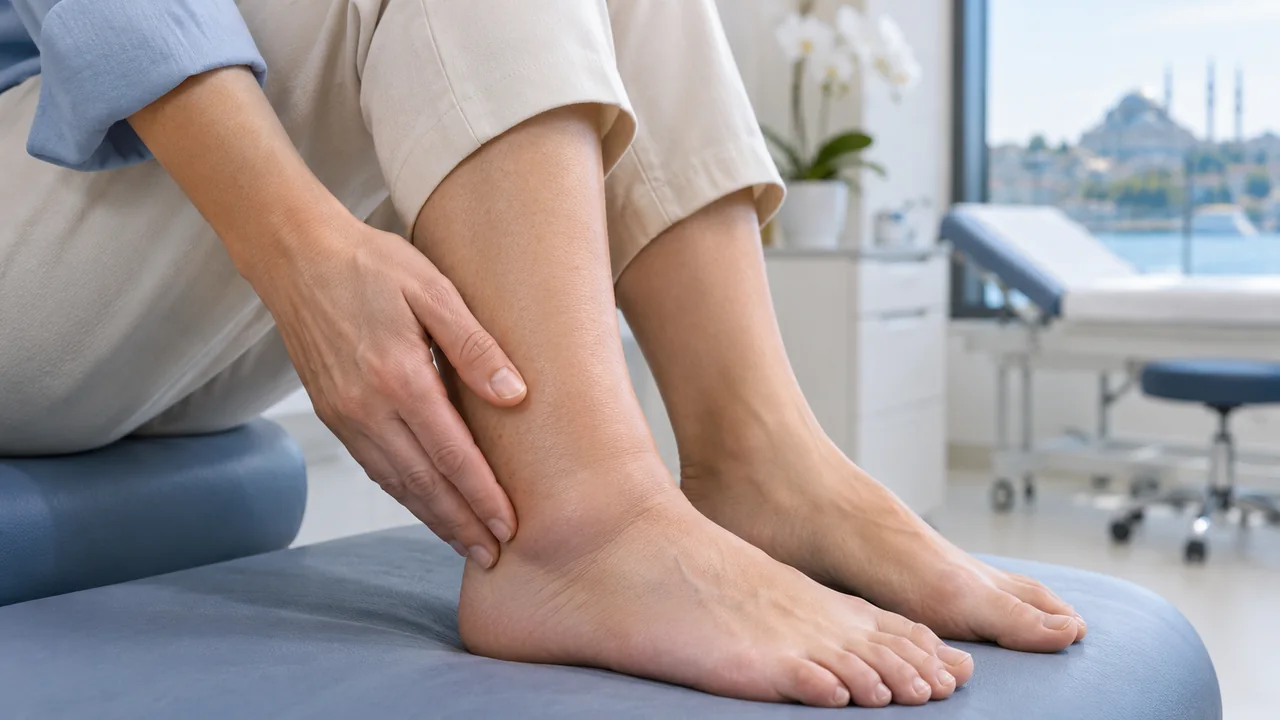
Swollen ankles can result from prolonged sitting or standing, injury, medicines or problems with the leg veins. Seek prompt medical assessment for new swelling in one ankle or leg without a clear cause. If swelling occurs with sudden breathlessness, chest pain, coughing up blood or fainting, call emergency services. In Türkiye, call 112.
This guide explains why one or both ankles may swell, when varicose veins can contribute and what information helps during an assessment.
In this article
- What Is Ankle Swelling?
- What Causes Swelling in One Ankle?
- Why Do Both Ankles Swell?
- Can Varicose Veins Cause Swollen Ankles?
- Swelling After Standing, Sitting or Travelling
- When to Seek Medical Help
- How Ankle Swelling Is Assessed
- Everyday Measures for Mild, Assessed Swelling
- Are Compression Stockings Suitable for a Swollen Ankle?
- Keeping Track of Recurrent Swelling
- Frequently asked questions
What Is Ankle Swelling?
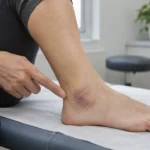
Ankle swelling is an increase in the size or fullness of the area around the ankle. It can affect the foot or lower leg as well. Oedema describes a build-up of fluid in the tissues. Inflammation around an injured joint can also make the ankle look swollen. The location, timing and symptoms help distinguish whether the clinical assessment should focus on the joint, skin, circulation or an underlying health condition.
You might first notice that your usual shoes feel tight, that a sock leaves a deeper mark, or that the skin looks stretched. In some people a temporary dent remains after gentle pressure. This is called pitting. The presence or absence of a dent does not establish the cause. Repeatedly pressing an area that is sore, warm or injured is unnecessary and will not rule out important problems.
Look at the area affected
Notice whether the fullness is limited to one side of the ankle joint, extends over the top of the foot or reaches the calf. Swelling close to the site of a recent knock may call for a different examination from swelling that involves the whole lower leg. Also note how it affects walking, bending the ankle and fitting into shoes. That gives the clinician more information than the size of the swelling alone.
Compare what the ankle looks like at the start and end of an ordinary day. If the appearance varies, describe what you were doing before you noticed it. Avoid using this observation period to delay medical assessment for new, unexplained swelling on one side or for any emergency symptoms.
What Causes Swelling in One Ankle?
Whether the left or right ankle is involved, the first question is how recently the swelling started. New, unexplained swelling in one ankle, foot or leg warrants prompt medical evaluation. An injury, infection, blood clot or another local problem may need to be considered. The side affected is useful to document, but the onset, recent events and associated symptoms are more informative than whether it is the right or left ankle.
Injuries and joint problems
A fall, twist or impact can cause swelling around the ankle. Tell the clinician which movement caused the pain, whether you could bear weight afterwards and where the ankle is most tender. Significant deformity, severe pain or inability to put weight on the foot after an injury needs prompt attention. Bruising near an impact can provide useful context, but a suddenly cold, pale or discoloured foot needs urgent assessment.
Infection and blood clots
Skin infection can cause redness, warmth, tenderness and swelling. A recent wound, bite or split in the skin may be relevant, especially if there is fever. A deep vein thrombosis, a blood clot in a deep vein, can also cause one-sided swelling with pain or warmth, particularly in the calf. These possibilities cannot be reliably distinguished at home. Even mild discomfort does not rule out a problem that needs prompt evaluation.
Long-standing swelling on one side may be assessed in light of a previous clot, operation, injury or condition affecting lymph drainage. An old problem does not explain every new change. If the leg becomes noticeably larger or more painful over hours or days, describe that change separately from the swelling you usually have.
Why Do Both Ankles Swell?
Swelling in both ankles can develop after long periods spent sitting or standing. Some medicines, pregnancy and chronic venous problems can also contribute. Heart, kidney, liver or thyroid conditions may be considered depending on the clinical history and other signs. More than one factor can be present, so an assessment looks at patterns and symptoms together.
Medication and recent dose changes
Some blood pressure medicines, hormone treatments and other prescribed drugs can contribute to ankle swelling. If the swelling began around the time you took a new medicine or changed dose, keep a record of that timing. Bring a full list of prescription and non-prescription medicines and supplements. Talk to the prescribing clinician before stopping or changing anything.
Changes beyond the ankles
Report swelling that is spreading up the legs, swelling in other areas or changes in breathing. If breathing difficulties start suddenly or are severe, seek emergency help. If you already receive care for a long-term condition, let your team know about changes in day-to-day symptoms, including what happens when you walk, climb stairs or rest. This can help them decide whether your existing care plan needs review.
Both ankles can be affected while one remains more swollen than the other. Tell the clinician if this difference is new or if one side has become painful, warmer or a different colour. Details about which change came first help distinguish a longstanding pattern from an immediate concern.
Can Varicose Veins Cause Swollen Ankles?
Chronic venous insufficiency is one possible cause of ankle swelling. Veins return blood from the legs towards the heart. When valves do not close effectively or blood flow is obstructed, pressure in the veins can rise. The lower legs can then feel heavy or swell, particularly after standing for a long time. Some people also notice visible veins or changes in the skin around the ankle.
What a vein assessment looks at
Tell the clinician if the swelling increases through the day, if you have visible varicose veins or if the skin has become itchy, darker or difficult to heal. These observations can support an assessment of venous disease but do not establish the cause by themselves. Bring any previous vein scan or treatment details, including which leg was treated and when.
A person with visible varicose veins can still develop ankle swelling for another reason. A new, rapidly growing swelling needs evaluation on its own merits. A vascular ultrasound may be appropriate in some cases. The method used to investigate a suspected new clot differs from an assessment of chronic valve function, so the clinician needs to know what has changed and when.
If the swelling is associated with heaviness, skin changes or visible veins, your healthcare team can explain which findings are consistent with a venous problem and which may need separate investigation. That distinction helps determine which follow-up is most relevant.
Swelling After Standing, Sitting or Travelling
The calf muscles help move blood through the leg veins when you walk. Sitting through a long journey or standing in one position at work reduces opportunities for movement. If ankle swelling develops under those circumstances, the timing can be useful. A shoe that fits comfortably in the morning may become tighter towards the end of a shift, or a sock mark may look more prominent than usual.
Think about whether the swelling appears on days away from work as well. Does it settle after rest, remain the next morning or steadily spread? Note any changes in your usual activity, such as a new job that involves prolonged standing or a period of limited walking after an injury. These details support an assessment without identifying the cause by themselves.
After a long journey
Some people notice mild swelling on both sides after prolonged sitting. New swelling in one leg, especially with calf pain or warmth, needs prompt evaluation even if the journey seems to explain it. Tell the team about recent surgery, a previous clot or a period when you were unable to move normally. If you have sudden shortness of breath, chest pain, coughing up blood or fainting, seek emergency help.
It may help to remember when you first noticed the difference, including whether it was present before travelling. If you were not able to check until you removed your shoes, describe what you noticed then and how quickly it changed afterwards. Do not wait to record a pattern when urgent symptoms are present.
When to Seek Medical Help
The urgency depends on how the swelling started and which symptoms accompany it. Do not wait for the ankle to become very large or painful if the swelling is new, unexplained and on one side. Worsening redness, warmth or fever also needs timely evaluation. The table below summarises when to seek help.
| Symptoms or situation | What to do |
|---|---|
| Swelling with sudden breathlessness, chest pain, coughing up blood or fainting | Call emergency services immediately. In Türkiye, call 112. |
| New, unexplained swelling affecting one ankle, foot or leg | Seek prompt medical assessment. |
| Rapidly increasing swelling with warmth, redness, fever or severe pain | Seek urgent medical assessment. |
| Visible deformity or inability to bear weight after an injury | Get assessed promptly. |
| Persistent or recurrent swelling on both sides | Arrange an appointment to investigate the cause. |
A foot that suddenly becomes cold, pale or blue, particularly with severe pain, numbness or difficulty moving it, also needs urgent assessment. Do not delay to see whether massage or compression improves it. If new one-sided swelling develops after an operation, use the contact instructions from your discharge team and explain when the symptoms started.
During pregnancy, sudden or marked swelling, especially with severe headache, changes in vision or swelling of the face or hands, needs urgent advice from your maternity team. Tell them when you first noticed the swelling and whether there are any other new symptoms.
How Ankle Swelling Is Assessed
A clinician usually begins with the onset, duration and distribution of the swelling. They may ask whether it started in hours or developed gradually, and whether you have had episodes like this before. Mention any operation, cast, long journey, injury or change in mobility. If you cannot remember an exact date, describe when you last walked comfortably or noticed that both sides looked the same.
What to expect from examination
The clinician may compare both ankles and calves, feel for warmth or tenderness, and check the skin for wounds or colour changes. They may examine movement at the ankle and, when appropriate, assess foot pulses and other circulation findings. They may also check for pitting. Each finding is interpreted in the context of the history. Similar-looking ankles can require different investigations depending on whether swelling followed a fall, an operation or a medication change.
When scans or tests may help
If a venous problem is suspected, ultrasound can help assess the veins. A clinician evaluating a suspected deep vein thrombosis may use a blood test or an ultrasound according to the findings and their estimate of risk. Chronic swelling with suspected vein valve problems may be assessed with a different type of ultrasound examination. The aim of the test matters when interpreting the report.
An ankle injury may need an X-ray or other imaging when the examination indicates it. If both ankles are persistently swollen, the health history may point towards a medication review, blood or urine tests or assessment of the heart. These are examples of tests a clinician might select. There is no single test that explains every case of ankle swelling.
What to bring to an appointment
Bring a list of medicines and recent changes, discharge summaries and previous vein reports if you have them. Mention whether the swelling affects shoes, walking or sleep. If it comes and goes, a record of when it occurred and dated photographs taken from a similar angle can help, especially when the swelling has eased by the time of the appointment. Seek urgent advice first if the pattern changes suddenly.
Everyday Measures for Mild, Assessed Swelling
If a clinician has assessed the swelling and given you a care plan, follow their instructions on activity and rest. If movement is permitted, breaking up long periods of sitting or standing with short bouts of walking may be practical. Supporting the legs while resting can help some people feel more comfortable. The right approach depends on the cause and any restrictions after an operation or injury.
Footwear, seating and skin care
Check that your shoes have enough room when swelling is at its usual worst. Shoes that repeatedly rub the same spot can irritate the skin. When sitting, choose a stable position with your feet supported. If you use a cushion when resting, avoid concentrating pressure over one small part of the heel. People with reduced sensation or restricted mobility should follow any skin and positioning plan given to them.
Look at the heel, around the ankle and between the toes if you have been advised to check your feet regularly. Contact your team if you see a new wound, blister, spreading redness or fluid leaking from the skin. It is possible to develop irritation without feeling it, particularly when sensation is reduced. Tell the clinician about footwear or garments that repeatedly rub in the same place.
Medicines and supplements
Avoid starting diuretics or herbal products on your own to treat swelling. They are not appropriate for all causes and can affect fluid balance or interact with other medicines. If you have been given a specific fluid or nutrition plan for a medical condition, discuss proposed changes with your care team. Likewise, ask the prescriber about a medicine you suspect is contributing to the swelling rather than stopping it yourself.
Everyday measures can make a known, stable problem easier to manage. A new one-sided pattern, increasing pain or warm, red skin changes the situation. In those circumstances, get medical advice before trying to deal with the swelling at home.
Are Compression Stockings Suitable for a Swollen Ankle?
Compression may be part of care for some causes of swelling, including certain venous conditions. The decision depends on the cause, arterial circulation, skin condition and leg measurements. A new, unexplained swollen ankle should be assessed before you choose a compression garment. Visible veins or sock marks do not determine what pressure is suitable.
Fit and circulation checks
Tell the clinician about arterial disease, reduced feeling in the feet or any open wound. They may need to assess arterial circulation before recommending compression. If a garment is prescribed, it should be measured and fitted correctly, with instructions on when to wear it and when to ask for a review. A change in ankle or calf size can affect how the same item fits.
If a stocking that previously fitted now gathers at the ankle or slips, report the change. Note whether the leg was swollen before you put it on and whether the problem affects one side or both. New pain, numbness or discolouration also needs advice. Sudden severe symptoms, particularly in a cold or discoloured foot, require urgent assessment.
For instructions once a suitable garment has been prescribed, read how to put on and take off compression stockings. Getting the heel into position and smoothing the fabric are useful dressing skills. They do not replace an assessment of an unexplained change in leg swelling.
Keeping Track of Recurrent Swelling
With recurrent swelling, a brief record can help explain what happens between appointments. Include the date, time, which side is affected and how long it lasts. Note any pain, redness, change in footwear or difference in daily activity. It can be useful to record whether the swelling improves by morning or remains unchanged after you rest.
Describe changes in concrete terms
An example such as both ankles swell after work, with shoes feeling loose again by breakfast, is easier to assess than a general description of discomfort. If one new episode affects only one ankle and includes calf pain, report it separately and promptly. A change in pattern is important information even if swelling has been present at other times.
Ask what change to look for between visits and what would signal the need to return sooner. Shoe comfort, skin condition or easier movement may be useful ways to describe progress, depending on the original problem. Bring new test results and a list of any changes to your care plan. If test results are pending, make sure you know who will explain them and how you should follow up.
At Istanbul Vein Center, a vascular assessment can explore whether a vein problem may be contributing to ankle swelling. Bring previous reports and, if you use one, the name and pressure class of your compression garment. If your symptoms suggest an emergency, call emergency services without waiting for a clinic appointment.
Frequently asked questions
Common questions about swollen ankles and when to seek assessment.
Why is my right ankle swollen?
Injury, infection and problems affecting venous or lymphatic drainage are possible. New swelling in one ankle without a clear explanation needs prompt assessment.
Is swelling in the left ankle different from swelling on the right?
The important details are when it started, whether there was an injury, what other symptoms are present and what medical conditions you have.
Can varicose veins make ankles swell?
Chronic venous insufficiency can contribute to swelling and a feeling of heaviness. Visible veins do not rule out other causes of new swelling.
Why do my ankles swell in the evening?
Standing or sitting in one position for a long time can contribute. Swelling that persists or keeps coming back can be investigated.
What if swelling comes with chest pain or shortness of breath?
Call emergency services immediately if there is sudden breathlessness, chest pain, coughing up blood or fainting. In Türkiye, call 112.
Should I put on compression stockings for a swollen ankle?
Compression can help in selected conditions. Get medical advice before using it for new or unexplained swelling.
What does a dent in swollen skin mean?
A temporary dent after pressure is called pitting. It can occur with oedema but does not identify what caused it.
Who should I see about swollen ankles?
Seek emergency care when there are urgent warning signs. Primary care can assess persistent swelling and arrange a specialist referral if needed.
Further reading
Clinical guidance on the causes and evaluation of oedema.
Itchy Ankles: Causes, Varicose Eczema and When to Seek Help
[…] from new painful warmth or discolouration. If ankle swelling is also a concern, see our guide to why ankles swell. A new or rapidly changing symptom should be assessed on its own […]