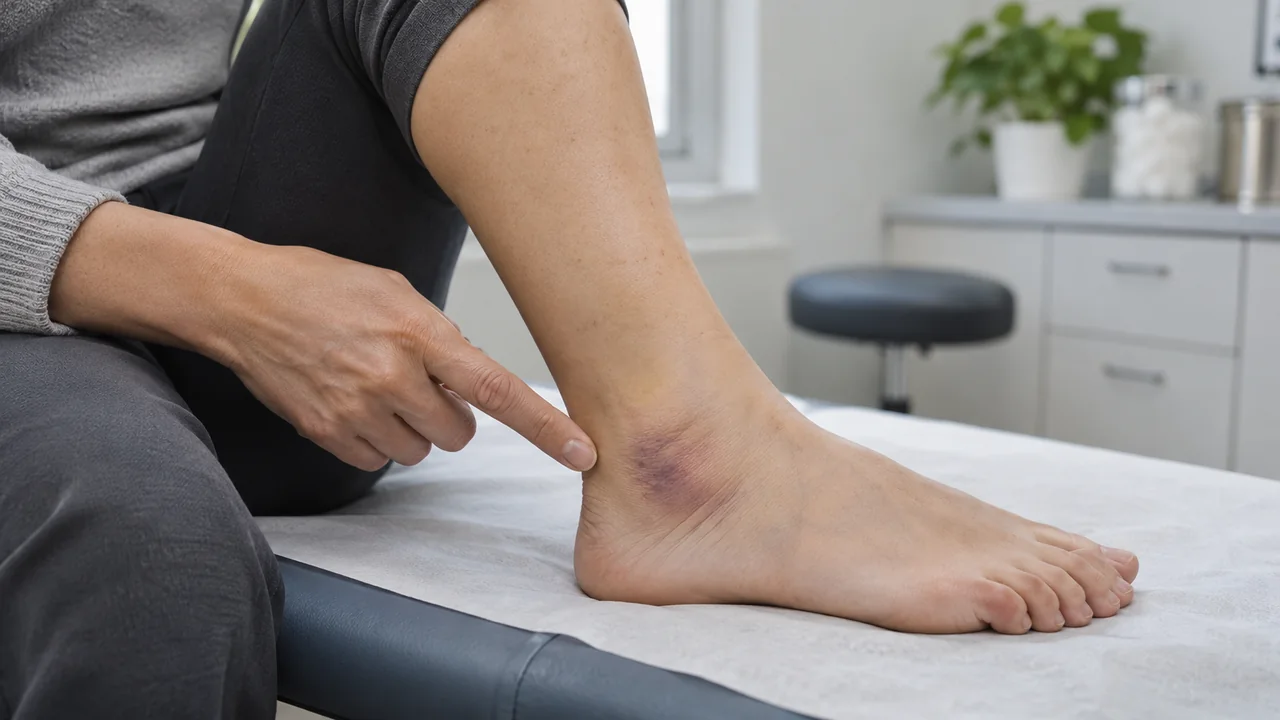
A bruise on the foot or ankle can develop after a knock, twist or pressure from footwear. A foot or toe that suddenly turns blue or purple, especially with coldness, severe pain, numbness or trouble moving, needs urgent assessment. In Türkiye, call 112 in an emergency.
This guide explains how to describe a local bruise, more widespread discolouration or long-standing changes around the ankle and when to seek help.
In this article
- A Bruise Versus a Blue or Purple Foot
- Bruising After an Ankle Sprain or Injury
- Foot Bruising Without a Remembered Injury
- Blue or Purple Feet and Circulation Problems
- Varicose Veins and Long-Standing Skin Discolouration
- When Is Foot Discolouration Urgent?
- How Foot and Ankle Bruising Is Assessed
- Monitoring a Bruise After Medical Assessment
- Examples of Patterns to Describe
- Follow-Up and Vascular Assessment
- Frequently asked questions
A Bruise Versus a Blue or Purple Foot
People describe several different appearances as foot bruising. A localised patch after a knock can form when small blood vessels leak into the tissues below intact skin. A new blue or grey colour affecting an entire toe or a wider area of the foot can be a different problem and may need urgent assessment. A brown area that has slowly developed above the ankle has a different history again.
Tell the clinician when you first noticed the colour and where it started. It helps to say whether it was a single spot or whether the whole toe or foot looked different from the other side. Also report coldness, numbness, pain or difficulty moving the foot. A sudden change accompanied by those symptoms should be assessed urgently. Do not wait to take a photograph or see whether the colour will return to normal.
How colour can look on different skin tones
Lighting and skin tone can change how easily a blue, purple or grey area is seen. Compare it with nearby skin and with the same area on the other foot. Temperature, sensation and movement are important details even when the change in colour is subtle. If you take photographs for a follow-up appointment, use similar lighting. A photograph looking lighter does not establish that the underlying problem has improved.
Explain which symptom came first. After a twist, pain and swelling may be noticed before a bruise develops. Where circulation is a concern, the timing of coldness, altered sensation or colour change may guide what the team checks first. A colour description by itself cannot confirm the cause.
Bruising After an Ankle Sprain or Injury
Bruising can develop after a direct blow or a twist that affects the ligaments and surrounding tissues. It may appear around the outside of the ankle or close to where the impact occurred. The extent of the visible mark does not give a complete picture of how serious the injury is. How much weight you can put on the foot, where you feel tenderness and how the ankle moves are also relevant.
Describe the event and what happened afterwards
Say whether your foot twisted inward or outward, whether you fell or hit something, and whether you could walk immediately afterwards. Tell the clinician whether pain is concentrated over a bone or spread across a wider area. Report any new numbness, weakness or coldness separately from the bruise. A visible deformity, inability to bear weight or severe pain needs prompt assessment.
A small bruise may accompany a painful injury, and a larger bruise may develop after the original pain and swelling. If symptoms are changing quickly or you are finding it harder to walk, describe that change rather than waiting for the bruise to fade. A clinician can advise on safe movement and whether imaging is necessary.
Why the mark may seem to move
After an injury, the area of visible discolouration or swelling can change over time. Explain the original location and point out where it has spread. If the foot becomes cold or numb, or if discolouration spreads rapidly with new pain, seek assessment rather than relying on what happened after a previous injury. If you cannot remember a clear injury, say so.
Foot Bruising Without a Remembered Injury
Pressure from footwear, repeated rubbing or a minor knock you did not notice can sometimes leave a bruise. Recurrent, large or unexplained bruises deserve medical attention, especially if you are also bruising elsewhere or noticing nose or gum bleeding. A clinician can look at the pattern and decide whether a medication review or further investigation is needed.
Medicines and treatment history
Anticoagulants and some other medicines can make bruising easier. Bring a list of prescribed medicines, non-prescription products and supplements, including any recent dose changes. Do not stop a prescribed medicine on your own after seeing a bruise. Tell the prescribing team when it appeared, whether it is getting bigger and if you have other symptoms.
Recent surgery, an injection or a vein procedure may be relevant. Check the discharge information for the expected location of bruising and how to report changes. If a painful swelling grows, if there is fever, or if the foot or toes suddenly become cold or numb, seek advice promptly. Do not assume that every change after a procedure is part of normal recovery.
What to report if bruising keeps recurring
Describe where the bruises appear, whether both feet have been affected and what you were doing on the days you noticed them. A seam or hard edge in a shoe may press on the same area. Mention any family history of bleeding problems and show other unexplained marks if present. These details are more informative than reporting only the largest bruise.
Blue or Purple Feet and Circulation Problems
A blue, purple or grey colour in the skin of the foot or toes can sometimes be related to circulation. A change involving the whole toe or part of the foot is worth describing separately from a small bruise after an impact. Note whether the foot feels colder, has become numb or is harder to move. Those symptoms affect how urgently it should be assessed.
Sudden changes in arterial blood supply
A foot that suddenly becomes cold, pale or discoloured, especially with severe pain, loss of sensation or difficulty moving it, needs emergency assessment. An abrupt reduction in arterial blood flow can be time-sensitive. Do not wait to see whether the colour improves or try to deal with it by applying pressure or massage. In Türkiye, call 112 for emergency help.
Colour changes in cold conditions
If a colour change seems to occur in the cold, explain how long it lasts and what happens when you warm up. A new, painful or persistent blue toe deserves prompt evaluation. The appearance of the rest of the foot does not explain a new change confined to one toe. A mark under the nail after a knock and a colour change involving the skin of the entire toe also give different information.
When there is new leg swelling
New swelling in one leg, particularly with calf pain or increased warmth, should be assessed promptly for possible causes including a deep vein clot. Neither the presence nor the absence of bruising confirms that diagnosis. Sudden breathlessness, chest pain, coughing up blood or fainting with leg symptoms calls for emergency help.
Varicose Veins and Long-Standing Skin Discolouration
Chronic venous insufficiency can be associated with gradual darkening of the skin near the ankle, swelling and itching. Skin changes associated with raised pressure in the veins often develop on a different timescale from an impact bruise. Some people notice a brown patch alongside dry or scaly skin and visible veins. Report when each change first appeared.
Visible veins and patches on the skin
A blue or purple vein may be seen as a line under the skin. A patch of colour on the skin surface or a rapid colour change involving a wider area is a separate finding. A clinician may look at the pattern of swelling, skin condition and previous vein history before deciding whether to investigate circulation.
If skin darkening comes with recurrent itching or scaling, see our guide to itchy ankles and venous eczema. Report new pain, warmth or a wound even if the darker patch has been there for a long time. If a venous problem is suspected, an examination and, when appropriate, vascular ultrasound can inform the care plan.
Do not choose a tighter compression garment to treat a new unexplained colour change. Whether compression is suitable depends on the cause, the skin and the circulation. New acute symptoms need assessment before you adjust a garment.
When Is Foot Discolouration Urgent?
The timing and associated symptoms guide when to seek help. Sudden colour change with coldness, severe pain, numbness or weakness is particularly concerning. If the colour changes back a little but those symptoms occurred suddenly, do not delay assessment. The table lists other changes worth reporting.
| What you notice | What to do |
|---|---|
| Sudden cold or discoloured foot with severe pain, numbness or difficulty moving | Call emergency services. In Türkiye, call 112. |
| New blue-grey toe or unexplained ongoing colour change | Seek prompt medical assessment. |
| Visible deformity, severe pain or inability to bear weight after injury | Get assessed promptly. |
| New swelling in one leg with calf pain or warmth | Seek prompt assessment. Call emergency services if you also have sudden breathlessness or chest pain. |
| Recurrent bruising without a clear cause or bruising with other bleeding | Contact a healthcare professional for assessment. |
When calling, state when the symptoms began and whether the foot is colder than the other one. Describe any loss of feeling or difficulty moving the toes. If there has been an operation or a recent dressing or cast, report it. Information about medication can help but should not delay the call.
Do not use tight bandages, heat, cooling or massage to test whether a sudden colour change will improve. If you have instructions from a recent operation, follow the emergency contact guidance for any new severe symptoms. Do not wait for a routine follow-up when the foot has suddenly become cold or numb.
How Foot and Ankle Bruising Is Assessed
The clinician can start with when the colour change occurred and whether it followed an injury, an operation or a change in footwear or activity. They may ask about travel, limited mobility or a change in medicines. Tell them if pain started before the mark appeared or whether a toe looked discoloured before anything else changed. This timeline guides the examination.
What happens during examination?
Depending on the problem, the clinician may compare colour, temperature, movement and sensation in both feet. They may check pulses, look at the distribution of swelling and examine the skin for cracks or wounds. After an injury, particular points of tenderness and the movement of the ankle may help decide whether assessment for a fracture or soft-tissue injury is needed.
Finding a pulse at home or seeing the skin regain some colour after pressing it does not rule out an important circulation problem. A clinician interprets individual signs together with the symptoms and history. If the foot is suddenly cold, painful or numb, do not postpone assessment to repeat home checks.
When are tests useful?
An X-ray may be appropriate when an ankle fracture is suspected. An ultrasound or another type of vascular imaging may be used to investigate a possible problem with blood flow. The type and timing of the test depend on whether the concern is related to arteries, veins, trauma or another cause. A suspected acute circulation problem requires timely evaluation.
If bruising is unexplained or keeps recurring, a clinician may look at the medicine history and whether there are other bleeding symptoms. They can decide whether blood tests are relevant. Bring a list of medicines and any follow-up instructions from earlier procedures, including the date and which leg was treated.
Preparing for an appointment
If the mark changes before your appointment, a dated photograph can help show where it began. Also explain how it affects walking, the fit of your shoes or the ability to move the ankle. Mention whether you have already tried changing shoes or resting and what happened afterwards. Provide your observations without having to choose a likely diagnosis yourself.
Monitoring a Bruise After Medical Assessment
If a healthcare professional has assessed the bruise and provided instructions, follow their activity and care plan. The colour may change over days. Pain, swelling and your ability to walk provide additional information about recovery. When you can return to work or sport depends on the injury and the assessment, including any instructions to avoid weight bearing.
What changes are worth recording?
Note whether the bruise is getting larger, whether swelling extends to another part of the foot and whether ordinary activities are becoming easier or harder. If the same shoe presses on the sore place every time, report where the pressure occurs. A change in footwear, a different exercise routine or new symptoms with a familiar walk can be useful details.
Record the day of injury, the first time you saw the bruise and any important changes that followed. Try to compare similar conditions. For example, tightness at the end of a work shift may be easier to describe than a change in the shade of the bruise under different lighting. Tell the team if pain or difficulty walking persists even as the colour fades.
Dressings, bandages and garments
If a bandage, support or stocking has been recommended, follow the instructions you were given. Adding another tight layer or changing the way a bandage is applied alters the pressure. New coldness, numbness, pain or discolouration needs assessment. If pain is severe or the foot has suddenly become cold or difficult to move, seek emergency help.
If you notice a change beneath the edge of a dressing or cast, report its location and timing. Do not wait for the next routine cast check if the toes become numb, cold or unusually discoloured. Your discharge instructions can help you identify who to contact for a problem that is not an emergency.
Examples of Patterns to Describe
The following examples illustrate the kind of information that can help a clinician. A visible pattern can point to questions worth asking. It cannot reliably establish a cause without the rest of the history and, when indicated, an examination.
A small mark after wearing new shoes
Note if the mark corresponds to a hard shoe edge and whether there was pressure while you walked. Mention a recent blister or irritation in the same place. A repeated mark in one location could be relevant to fit. New severe pain, numbness or colour change affecting a whole toe or foot needs assessment regardless of the footwear.
Swelling with darker skin around the ankle
Explain whether swelling has been present for weeks and whether it becomes more noticeable through the day. If the area has become itchy, dry or scaly, tell the clinician whether that started before or after the colour change. Our guide to swollen ankles describes observations to share during assessment. A new painful change on one side should be reported promptly.
Discolouration affecting the nail or an entire toe
Say whether the mark is confined beneath the nail or also affects the skin around it. If you have noticed new coldness, pain or a change in sensation, report it immediately. Give the time you first noticed the change and any recent injury or pressure from footwear. A persistent unexplained blue toe deserves prompt assessment even if nearby toes look normal.
A bruise after a medical procedure
Check the discharge information for changes expected after the procedure. Explain whether the mark is close to the treated area and whether it has spread since you first noticed it. Report any new fever, worsening swelling or pain. The date and type of procedure help the team put the symptoms in context.
Follow-Up and Vascular Assessment
At follow-up, describe the changes that have made the greatest difference to your daily life. Tell the clinician if the bruise has faded but you still cannot wear your usual shoes, or if a new area of discolouration has appeared. Include changes in medicines, exercise or footwear and bring any previous reports you have.
Ask what to monitor and what changes should prompt an earlier assessment. If a test is arranged, learn what it is intended to investigate and who will explain the result. A brief written record of the clinical advice can help if another healthcare team is involved. Keep following prescribed medicines and care instructions unless the relevant clinician advises a change.
Istanbul Vein Center can assess whether changes such as chronic ankle discolouration, swelling or visible veins may be associated with venous disease. Previous scans or procedure notes and a list of medicines can help with the assessment. Emergency symptoms such as a suddenly cold, painful or numb foot require emergency care without waiting for a clinic appointment.
Frequently asked questions
Common questions about foot bruises and colour changes.
Can an ankle sprain cause bruising?
Yes. Ligament and soft-tissue injury can be associated with bruising and swelling. Get assessed promptly if the ankle looks deformed, pain is severe or you cannot bear weight.
Why is my foot bruised without an injury?
Unnoticed pressure or minor injury, medicines and other health conditions may contribute. Talk to a clinician about recurrent, large or unexplained bruises.
When is a blue or purple toe an emergency?
A new unexplained colour change needs prompt assessment. Call emergency services if the foot suddenly becomes cold, severely painful, numb or difficult to move.
Can varicose veins darken the skin around the ankle?
Chronic venous insufficiency can be associated with gradual darkening and swelling. A sudden new colour change needs its own assessment.
Can bruising and leg swelling indicate a blood clot?
Bruising does not diagnose a clot. New swelling in one leg, calf pain or warmth should be assessed promptly.
What if I take blood thinners and notice a bruise?
Do not stop prescribed medication on your own. Report new, unexplained or expanding bruises and mention any other bleeding.
Should I wear compression stockings for foot bruising?
Get new unexplained discolouration assessed before applying compression. Wear a garment only as advised for your circumstances.
Who should I see about foot discolouration?
Seek emergency care for sudden severe symptoms. For persistent or unexplained marks, a clinician can assess whether injury, skin problems or vascular disease need further evaluation.
Further reading
Clinical guidance on injury, circulation and venous skin changes.

Leave a comment