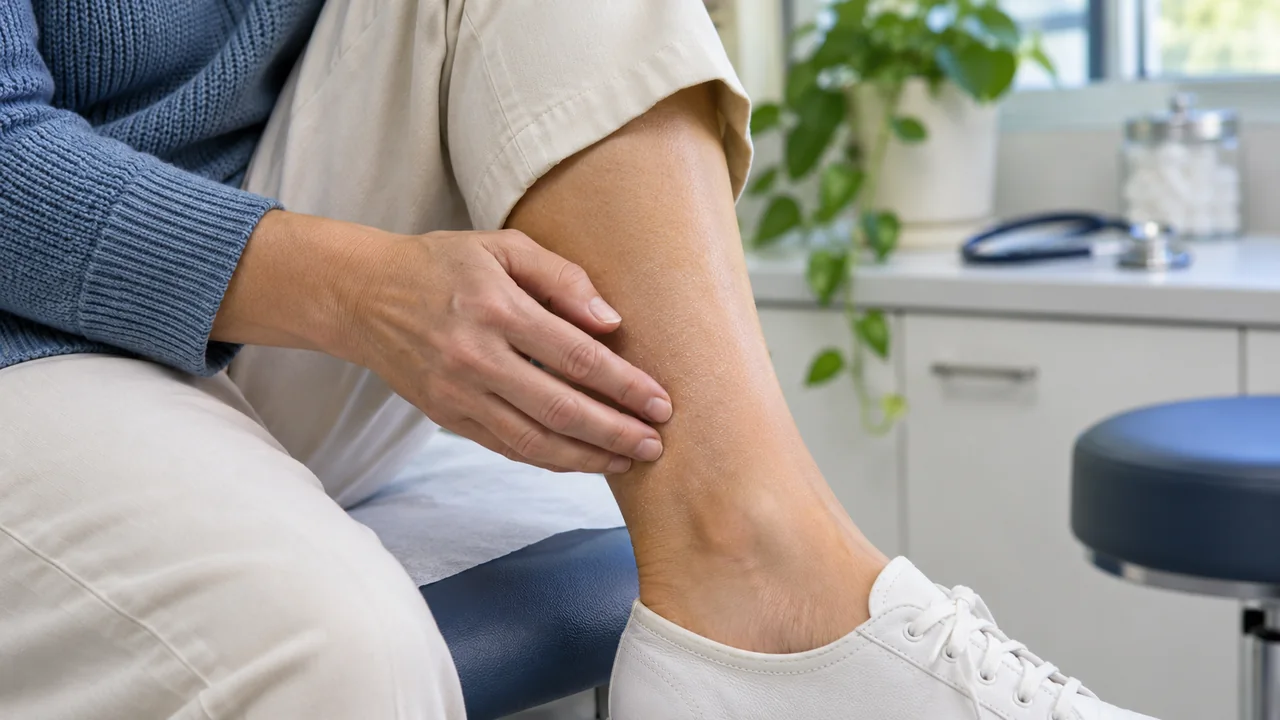
Itchy ankles may be related to dry skin, footwear, contact dermatitis, athlete’s foot or venous eczema. Recurrent swelling, visible veins or darker patches around the ankle can make a venous assessment relevant. The appearance and timing of the itch help guide which possibility to consider.
Seek advice promptly if you notice spreading skin changes, new warmth, pain or fever. This guide explains common causes, what an assessment may involve and how to protect irritated skin while you seek advice.
In this article
- What to Check When Your Ankles Itch
- Varicose Eczema and Venous Insufficiency
- Dry Skin, Contact Dermatitis and Athlete’s Foot
- What the Location and Timing Can Tell You
- When to Seek Medical Advice
- How an Itchy Ankle Is Assessed
- Daily Skin Care for Itchy Ankles
- How Treatment Depends on the Cause
- Can Compression Stockings Make Ankles Itch?
- Keeping Track of Recurring Itch
- Frequently asked questions
What to Check When Your Ankles Itch
Itchy ankles can develop around the ankle bones, under a sock band or where a shoe touches the skin. The skin may look dry, scaly or discoloured, or it may look almost unchanged at first. To narrow down the possibilities, notice where the itch started and when it becomes more noticeable. An itch that follows the edge of a new shoe, for example, raises different questions from a persistent itch above both ankles that swell towards the end of the day.
Compare both ankles and look at the soles and spaces between the toes. The first place that looked different may be smaller than the patch that eventually became itchy. Think about whether a sock, a shoe, a plaster or a product applied to the skin touched the area. Keeping the names of recently used products can be useful if the problem continues.
Look for changes alongside the itch
Flaking, scaling, cracks, fluid coming from the skin, swelling, warmth and tenderness are worth mentioning. Scratching can leave marks or scabs that were not part of the original rash. If you can, describe which changes appeared before the scratching. A photograph of the earliest visible change may help during a consultation, particularly if the rash comes and goes. Do not delay urgent assessment to take photographs or make a list.
The colour of an irritated area can vary with skin tone. In darker skin, a patch may look brown, purple, grey or darker than the surrounding skin. Warmth, tenderness or swelling can offer additional clues. If the area is hot, painful or quickly changing, seek advice even if redness is difficult to see.
Varicose Eczema and Venous Insufficiency
Varicose eczema is a skin condition affecting the lower legs. It can be associated with chronic problems in the veins and is also known as venous eczema or stasis dermatitis. Leg veins carry blood back towards the heart. If the valves do not work effectively, or if blood flow is obstructed, pressure in the veins can rise. Persistent changes in venous pressure can be associated with swelling and skin inflammation around the ankles.
The skin can become itchy, dry, scaly or cracked. Some people also notice swelling, visible veins, heaviness in the lower legs or darker skin above the ankle. During a flare, the skin may become tender or weep. Symptoms may affect one leg or both. An assessment considers these findings together because other skin problems can produce similar changes.
Are visible varicose veins enough to identify the cause?
Visible veins help provide context. A clinician will also look at where the swelling and rash are, whether there have been previous vein problems and how quickly symptoms developed. A past deep vein thrombosis or operation may be relevant. Mention any history even if that earlier problem seemed to have resolved. Conversely, the absence of prominent veins does not rule out a venous problem.
Swelling and changes in skin colour
Tell the clinician whether swelling was present before the itch, and whether colour changes have developed over weeks or appeared suddenly. A longstanding dark patch gives a different history from new painful warmth or discolouration. If ankle swelling is also a concern, see our guide to why ankles swell. A new or rapidly changing symptom should be assessed on its own merits.
Dry Skin, Contact Dermatitis and Athlete’s Foot
Several skin problems can cause itching around the ankles. The appearance of the affected skin, contact with clothing or shoes, and changes between the toes can guide the assessment. Two problems can occur at the same time. For example, an already irritated area may become more uncomfortable after exposure to a fragranced product.
Dry skin
Dry skin may feel rough, look flaky or develop fine cracks. Repeated washing with harsh soap or spending a long time in hot water can worsen dryness. The itch may affect a wider area of the lower leg and feel worse where the ankle rubs against a sock or shoe. Increasing pain, warmth or persistent weeping deserves assessment rather than being assumed to be ordinary dryness.
Contact dermatitis
Contact dermatitis may be related to irritation from a substance or to an allergic reaction. New shoes, sock bands, dressings, laundry products and creams can all be relevant. The shape of a rash can sometimes follow the area of contact, such as the edge of a shoe or a strap. Symptoms may appear with repeated exposure, and a product that has previously been tolerated can still be relevant.
Note when you started using the item and whether there is a difference on days you do not use it. Save the name of any cream you tried, especially if the skin worsened after applying it. The clinician can use the pattern and history to decide whether further assessment for contact allergy is appropriate.
Athlete’s foot
Athlete’s foot is a fungal infection that often causes itching, scaling or cracking between the toes. It may also affect the sole or sides of the foot. Check the spaces between the toes and the skin near the nails when describing the symptoms. Eczema and fungal infections can look similar. If a rash persists or worsens, find out the likely cause before trying a steroid cream on your own. A clinician may examine a skin sample if needed.
What the Location and Timing Can Tell You
Document which ankle is affected and whether the condition changes at particular times of day. A shoe may rub more strongly on one side and a dressing may touch only one ankle. Vein problems and skin conditions can also affect the legs unevenly. The location and timing are useful observations to share during assessment.
| What you notice | What to report or do |
|---|---|
| Itching along a sock band or shoe edge | Describe new clothing, footwear, skin products and areas of friction. |
| Scaling or cracks between the toes | Report changes on the soles or around the nails as well. |
| Persistent swelling or darker skin around the ankle | Explain the timing and share any history of vein disease or treatment. |
| New warmth, pain or rapidly spreading discolouration | Seek prompt medical assessment. |
| Itching at night or in other areas of the body | Explain whether sleep is affected, whether there is a rash elsewhere and whether anyone at home has similar symptoms. |
Itchy ankles at night
Some people notice itching most when they settle down in the evening. Consider what happened before it became noticeable. A hot shower, a warm bedroom, swelling after a long day or removing footwear may help explain the timing. An itch that wakes you from sleep or comes with a rash elsewhere is worth discussing, especially if you recently started a medicine or someone in the household is also itchy.
Do not assume a single apparent trigger explains the whole history. A rash can improve and worsen over several days on its own. Keep track of repeat patterns and of whether the marks appeared before scratching. Mention anything that affects work, walking or sleep, as these are practical ways to describe the impact.
When to Seek Medical Advice
Make an appointment if itching persists, keeps recurring, disrupts sleep or comes with broken or weeping skin. Seek prompt assessment when there is new pain, warmth, swelling, fever or a change in colour that is spreading. These findings can occur with an infection or another condition that requires medical attention. The appearance of the rash alone cannot reliably establish the cause.
New swelling on one side
New swelling of one leg without a clear cause needs prompt evaluation, especially if there is calf pain or warmth. Make sure to report the swelling even if the ankle itch is what bothered you first. Sudden breathlessness, chest pain, fainting or coughing up blood with leg symptoms can be an emergency. In Türkiye, call 112 for emergency help.
Skin wounds and changes that are getting worse
Skin can weep during an eczema flare, but rising pain, heat, spreading discolouration or fever needs assessment for infection. Avoid trying several products on a new wound while you wait to see what happens. Follow any wound care plan already given to you. If you have diabetes, reduced sensation or a circulation problem, pain may not be a useful guide to how much the skin has changed. Report new cracks or wounds according to your foot care instructions.
When you request an appointment, give the time the most concerning change began. For example, tell the team if itching has lasted for several weeks but the skin only became hot and painful that morning. This gives a clearer account than listing the symptoms without their order.
How an Itchy Ankle Is Assessed
An assessment begins with questions about when symptoms started and where the first visible change appeared. The clinician may ask about new shoes, insoles, socks, dressings, toiletries or medicines. Previous eczema, allergies, fungal infection, leg swelling and vein treatment can all help put the symptoms in context. If multiple changes happened in the same week, describe the approximate sequence.
Examining the skin and circulation
The ankle, lower leg, soles, toe spaces and nails may all be inspected. The clinician may check whether one side is warmer, whether the leg is swollen and how the rash is distributed. A patch that follows the line of an elastic band provides different information from scaling that extends from the toes across the sole. They may also look for areas of cracking or weeping that need additional care.
If a venous condition is suspected, an examination of the veins and, when appropriate, an ultrasound may be useful. Ultrasound gives information about vein structure and flow. Skin conditions may need other tests, such as testing for an allergy or examining a skin sample if a fungal infection is suspected. The initial examination helps decide which, if any, of those tests would clarify the cause.
Preparing for an appointment
Bring the names of skin products or dressings you tried, including products available without a prescription. Note when they were used and whether they helped or caused discomfort. Mention patterns associated with exercise, showering or wearing work shoes. Saying that the itch follows the inside edge of a work boot on days you wear it is more informative than saying that shoes might be involved.
If the skin looks better on the day of the appointment, an earlier photograph can help show where changes appeared. Include the date if you know it. Warmth, pain and subtle swelling still depend on the history and examination, so explain those symptoms alongside any photographs you share.
Daily Skin Care for Itchy Ankles
Keep the skin care routine simple while the cause is being assessed. Avoid scrubbing the area and check whether clothing or footwear repeatedly rubs it. Repeated scratching can break the skin. A clinician can advise on care if the skin is already cracked, weeping or painful. Skin care also needs to fit around any dressings or compression garments you have been told to use.
Washing and moisturising
Use lukewarm water, clean the skin gently and pat it dry. Apply any recommended moisturiser as instructed. If a new product causes more burning or itching, record its name and ask for advice. Clarify any change to a prescribed product with the clinician who recommended it.
Applying different oils, antiseptics or fragranced products to the same area can make irritation harder to interpret. Keep a short list of what you used and when. Ask about care before applying products over broken skin or a weeping area. If the problem keeps returning to the same spot, show where it sits in relation to the shoe, sock or dressing.
Footwear and clothing
Notice whether the shoe rubs when you walk or the sock band leaves a mark exactly where the rash occurs. If your socks become damp or sweaty, change them and let the feet dry. Report whether you have had to stop wearing particular shoes or cut short normal walks. Those changes help explain the impact of the symptoms and show whether the routine needs to be adjusted.
Keeping nails short may reduce the chance of breaking the skin if you scratch without noticing, particularly during sleep. If you develop a new crack, sore or spreading colour change, check it with your care team rather than adding a new cream to your routine. Persistent sleep disruption is worth discussing even when the visible rash looks limited.
How Treatment Depends on the Cause
Treatment is chosen according to the cause of the itch and the condition of the skin. Dryness, contact reactions, venous eczema and fungal infections can require different measures. Ask what the clinician thinks is driving the symptoms, how to apply the recommended treatment and which changes should bring you back for review.
Eczema and contact reactions
A moisturiser may be suggested to support the skin barrier. For some eczema flares, a clinician may prescribe a topical anti-inflammatory treatment for a specific area and duration. If contact dermatitis is suspected, limiting contact with the irritant or allergen is part of the plan. Keep track of products or garments that repeatedly touch the affected area so the history can be reviewed.
Fungal infection or another skin infection
A pharmacist or clinician can advise on suitable antifungal treatment when athlete’s foot is suspected. Get the skin examined if the rash persists, spreads or occurs near a wound, particularly if earlier treatments did not help. Hot, painful skin that is changing quickly, with or without fever, should be assessed promptly for other causes.
Venous eczema and swelling
With venous eczema, care may involve both treating the skin and assessing underlying swelling or venous disease. A previous vein procedure does not automatically determine the current treatment. Ask how the skin treatment fits into the overall plan and whether reassessment of the leg circulation or compression garment is appropriate. Follow up if the itch improves but swelling, a wound or pain remains.
If you have several prescribed products, write down which one goes on which area and when. If new burning, redness, spread or weeping occurs, tell the team rather than assuming it is part of recovery. A written plan makes it easier to report what you used and what changed afterwards.
Can Compression Stockings Make Ankles Itch?
Some people notice dryness, fabric friction or irritation under a stocking band. Check whether the itch began before you wore the garment and where the mark sits after you remove it. New pain, numbness, coldness or a substantial colour change needs advice. Seek urgent assessment if these symptoms appear suddenly or are severe.
Checking fit and fabric
Ask for a fit review if the material keeps collecting around the ankle, the band slides, or the same pressure mark recurs. Changes in leg size or wear on an older stocking may affect the fit. A trained fitter can watch how you put it on and check whether the heel is seated and the material evenly spread. Cutting, folding or adding other tight garments can change the fit and pressure.
Appropriate medical compression depends on the skin, arterial circulation and cause of swelling. Get new, unexplained swelling assessed before starting compression yourself. If your team has recommended a specific garment, our guide to putting on and taking off compression stockings shows the everyday fitting steps.
Tell the fitter if the itching followed a switch to another brand or design. Show where the fibres or top band touch the skin and bring the original packaging if possible. Different fabrics can look similar, so knowing the actual product is more useful than relying on its colour or style.
Keeping Track of Recurring Itch
Write down the first area affected, the skin changes you saw and any new contacts you can remember. There is no need to watch the skin all day. A few notes on sleep, footwear or swelling are usually more useful. Record a new episode of pain, warmth or one-sided swelling separately, even if there is a long history of the ankle itching.
Preparing for follow-up
Tell the clinician how often you were able to use the recommended treatment and whether the skin, swelling or discomfort improved. If a product was difficult to apply or a stocking too hard to put on, explain which step was difficult so the care plan can be reviewed. Bring the names of the products you actually used, especially if a different brand was supplied.
When more than one team is involved, ask them how to combine instructions. For example, a prescribed cream and a compression stocking may both be used on the lower leg. Find out how the timing of application and wear should be coordinated, and who to contact if new skin changes develop. If investigations are pending, ask when the result will be explained and what symptoms should prompt an earlier review.
Istanbul Vein Center can assess whether vein problems may contribute when itching occurs alongside visible veins, swelling or changes in the lower-leg skin. Previous ultrasound reports and details of any compression products can help during assessment. If the examination suggests a separate skin disorder, a dermatology assessment may also be appropriate.
Frequently asked questions
Common questions about ankle itching and associated skin changes.
Can itchy ankles be a sign of varicose veins?
Chronic venous disease can be associated with itching, swelling and darker skin around the ankles. Other skin conditions can cause similar symptoms.
Why are my ankles itchier at night?
Warmth, dry skin or swelling that increases through the day may become more noticeable at night. The timing alone does not identify the cause.
What causes itchy and red ankles?
Contact dermatitis, eczema and infection are among the possibilities. Seek medical advice promptly for new heat, pain, spreading redness or fever.
Can ankles itch without a rash?
Yes. Dryness and friction can cause itching with little visible change at first. Discuss persistent, widespread or sleep-disrupting itching with a clinician.
How can eczema be distinguished from athlete’s foot?
The distribution and skin examination can help. A clinician may take a sample if the cause is unclear.
What if compression stockings make my ankles itch?
Check for creases or irritation and ask for a fit and skin review if it keeps happening.
What if the itching comes with new swelling?
Get prompt assessment for unexplained swelling on one side. Call emergency services if chest pain or sudden breathlessness occurs.
Who should I see for itchy ankles?
Primary care can start the assessment. Skin findings may warrant a dermatologist, while symptoms of venous disease may warrant a vascular assessment.
Further reading
Patient information on venous eczema, contact reactions and skin infections.
Foot and Ankle Bruising: Causes and When to Seek Help
[…] skin darkening comes with recurrent itching or scaling, see our guide to itchy ankles and venous eczema. Report new pain, warmth or a wound even if the darker patch has been there for a long time. If a […]