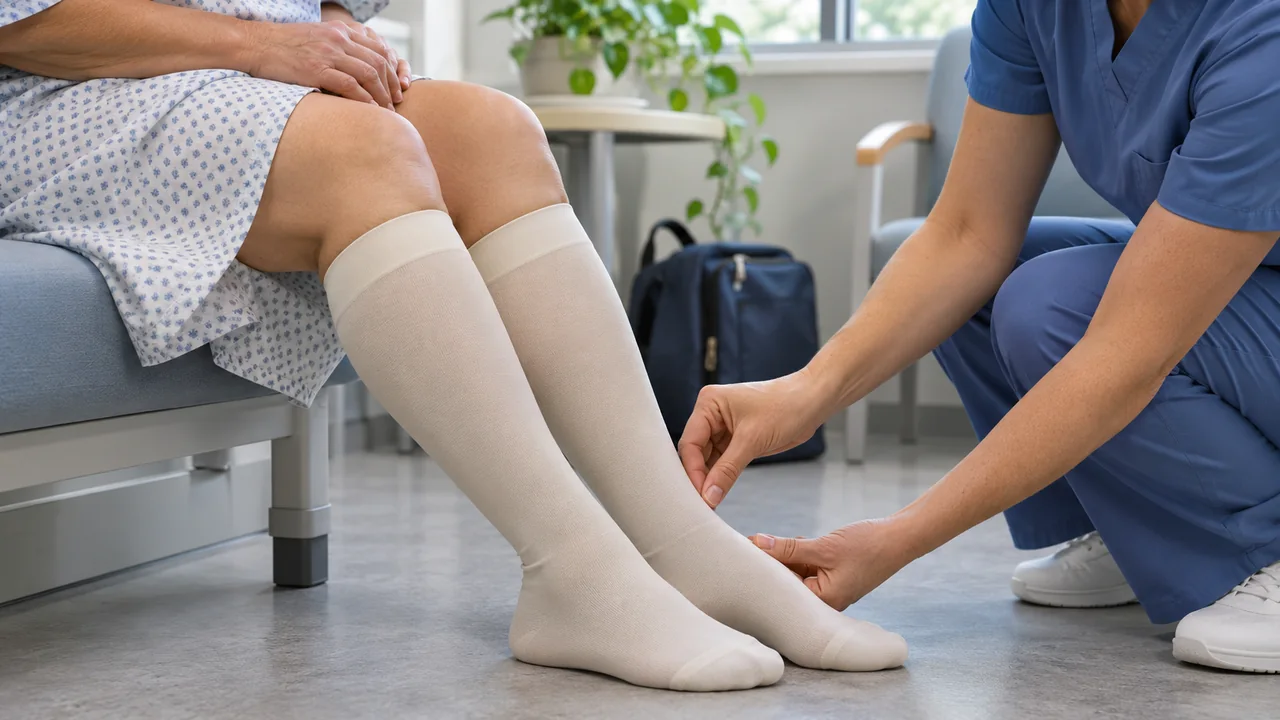
How long to wear compression stockings after surgery depends on the operation, your mobility, the risk of blood clots and your discharge plan. Stockings provided specifically to reduce post-operative clot risk are often called anti-embolism stockings. Confirm your own wear schedule with the surgical team.
This guide explains why stockings may be prescribed, how night wear and skin checks work and which symptoms need medical assessment.
In this article
- How Long Should You Wear Stockings After Surgery?
- Why Are Anti-Embolism Stockings Used?
- Anti-Embolism Versus Medical Compression Stockings
- Do You Wear the Stockings at Night?
- Measuring and Putting On the Stocking
- How Surgery and Mobility Affect the Duration
- When Suitability or Fit Needs Reassessment
- Symptoms That Need Medical Help
- Questions to Ask Before Discharge
- What to Review Before Stopping the Stocking
- Frequently asked questions
How Long Should You Wear Stockings After Surgery?
There is no single number of days that applies after every operation. The length of time depends on the procedure, your risk of a blood clot and bleeding, your mobility, the garment you were given and the surgical team’s discharge plan. Some patients use stockings only in hospital, while others are advised to continue at home. Ask the team that fitted them if your discharge information does not say when to stop.
When anti-embolism stockings are prescribed, one approach is to wear them during the period when mobility is significantly reduced. Taking your first walk after surgery does not necessarily mean you are back to your usual activity. For example, a few trips around the house may be a substantial improvement while still leaving you much less active than before surgery. Ask what level of mobility or review date your own plan uses.
A date and a condition are different instructions
Some people are given a specific date. Others are told to continue until they reach a certain stage in recovery or until they are reassessed. If there is a fixed date, confirm whether it is counted from the operation or from discharge. If the plan depends on mobility, ask the team to explain what change they are looking for. A date for increasing weight bearing may be separate from the date or condition for stopping the stocking.
If an appointment is delayed, or your movement remains restricted longer than expected, check the plan as the original end date approaches. Explain what you can do now, whether you need support walking and whether any fit or skin problem is preventing you from using the stocking. That information gives the team more to work with than the name of the operation alone.
Look at the discharge instructions
Find the product name, the leg or legs to wear it on, whether it stays on at night, when to remove it for hygiene and where to check the skin. If the hospital routine differs from the instructions for home, ask which applies after discharge. Keep the stocking plan, medicines and mobility instructions in separate notes if that helps you follow each one.
Why Are Anti-Embolism Stockings Used?
When movement is reduced after surgery, the risk of a blood clot in a deep vein may increase in some people. For eligible patients, anti-embolism stockings provide graduated pressure and can be one part of a plan to reduce that risk. The wider plan may include early movement when permitted, an anticoagulant or another mechanical method. The choice depends on the operation and the patient’s circumstances.
Clot prevention is assessed individually
The surgical team considers factors including the procedure, previous clots, other conditions, expected movement after surgery and the risk of bleeding. Two people having the same operation can receive different instructions. A person with a different health history or a longer period of restricted mobility may need a different prevention plan.
If you have been prescribed an anticoagulant, do not change the dose or stop taking it because you are also wearing stockings. Likewise, taking medicine does not automatically mean that the stocking can be stopped. Ask the team which methods apply to you and when each one should end. Medicines, garments and physical activity may be managed on different schedules.
Using the stocking alongside your activity plan
Follow the limits your team gave you on standing, walking and putting weight on the operated leg. Physiotherapy and changes in pain control can alter what you are able to do. If you are told to remove the stocking during a session, clarify when it should go back on. Tell the team if discomfort occurs around the operated area, under the band or in the foot. The location helps them decide whether fit should be checked separately.
Anti-Embolism Versus Medical Compression Stockings
A hospital anti-embolism stocking and a medical compression stocking used for varicose veins or venous disease can serve different purposes. Both are often called compression stockings in everyday language. Confirm the product name and intended use with the staff who supplied it. The colour, height of the garment or presence of a toe opening does not reliably identify the correct item.
| Product or use | What guides the choice? |
|---|---|
| Anti-embolism stocking after surgery | Clot risk, mobility, whether the garment is suitable and the discharge plan. |
| Medical compression for venous disease or after a vein treatment | The vein condition, procedure performed, circulation and skin assessment. |
| Previously purchased compression garment | The surgical team should confirm its intended use, fit and suitability. |
| Intermittent pneumatic compression | A separate mechanical method used in selected situations under clinical guidance. |
If you already use compression for a vein condition, show the staff the packaging or note the brand and pressure class. Ask which garment to wear on the ward and which to wear after you go home. Instructions for a stocking prescribed after a vein procedure may differ from instructions for anti-embolism stockings used after another operation.
If you are unsure which garment has been ordered, ask the person providing the fitting to point out the difference on the label. This is especially useful if you were measured before the operation and given a second item afterwards. Record which garment is meant for each leg if sizes differ. This avoids relying on appearance when the stockings are laid out together at home.
Do You Wear the Stockings at Night?
Some patients who need anti-embolism stockings are advised to wear them during the day and at night while mobility is significantly reduced. Daily removal for hygiene and skin inspection may be part of that plan. Other types of compression can have different instructions. Check when the stocking should be removed, whether any help is needed and when it should be put back on.
Building in daily skin checks
When you take the stocking off as instructed, check the heels, toes, skin around the ankle bones and the area under the upper band. People with very restricted mobility, skin damage or reduced sensation may need closer or more frequent checks. Ask who should help you and how often to inspect the skin. Tell the team if you cannot reach or see part of the foot.
Clarify what to do during bathing, dressing changes and physiotherapy. If bending or standing without support is restricted, arrange help rather than trying to dress while balancing. Work out where you can sit safely to remove and replace the garment. Follow the instructions on drying the skin and garment before putting it back on.
If a problem occurs overnight
Check the plan if the stocking slips, forms a large crease or becomes uncomfortable at night. Ask for help if you cannot reposition it safely. Tell the care team when the discomfort starts and whether you see a change after removing the garment. Sudden coldness, severe pain, numbness or an unusual colour change needs urgent assessment. Find out in advance how to reach the relevant team outside normal hours.
If you could not put the stocking back on, explain why. Avoid doubling layers or choosing a tighter stocking to make up for missed time. A change in fit, swelling, pain or skin condition may need to be assessed before the garment is used again.
Measuring and Putting On the Stocking
A healthcare professional trained in fitting should measure the leg and show you how to put on the garment. Swelling after surgery can change the size needed and may require remeasurement. A stocking that looked or felt correct on the ward can fit differently once swelling changes at home. Contact the fitting team if the upper band keeps sliding, the fabric bunches or the stocking feels substantially tighter.
Check the heel and fabric
Settle the heel into the heel pocket and smooth the fabric so that it does not gather near the ankle. Keep the upper band flat. Some anti-embolism stockings have an opening for inspection. Ask where the opening should sit for your model. Do not cut the material or move the opening by rolling the garment back.
If it is hard to bend, grip the fabric or reach your foot, ask whether a dressing aid or help from another person would suit your recovery plan. A fitting demonstration is useful for the person who will help at home. After applying the stocking, check the location of the heel, the area around the toes and how the band sits.
Preparing for a fit review
Bring the stocking or the packaging to the appointment. Explain whether swelling is different in the morning and the evening, which leg is affected and whether the original measurement was taken before or after surgery. Mention difficulty putting it on or taking it off. A staff member can assess whether the problem is caused by the garment, the fit or the dressing technique.
For general dressing steps, see how to put on and remove compression stockings. Use the instructions supplied for your anti-embolism product when they give a specific method or care schedule. Report damage or an unexpected change in fit after washing.
How Surgery and Mobility Affect the Duration
Movement returns at different rates after orthopaedic surgery, abdominal surgery and day procedures. The operation alone does not determine how long you should wear stockings. Patients who have had similar operations may put weight on the leg at different times, use different walking aids or follow different medicine and follow-up plans.
Getting up compared with returning to normal movement
Tell the team when you first started walking, what support you need and whether you spend most of the day seated or in bed. A person who can walk to the bathroom with help may still have substantially reduced mobility. If a physiotherapist gives you new instructions about walking or stairs, check whether the stocking plan needs its own review.
If recovery is slower than expected, restrictions last longer or you are readmitted to hospital, the prevention plan may need to be reassessed. As the original end date approaches, report what you can actually do. For example, say whether you can walk outdoors, use stairs or put full weight on the operated leg according to your instructions. The team can use these details to decide if the existing plan still applies.
Going home on the same day
Same-day discharge does not mean every patient has the same risk. Some people return quickly to their typical movement, while others may have temporary restrictions or personal risk factors. Confirm the plan for stockings, movement and medicines separately before leaving. Ask what changes to report if you are less mobile at home than the team expected.
When Suitability or Fit Needs Reassessment
Anti-embolism stockings are unsuitable in some circumstances. Known or suspected peripheral arterial disease, reduced sensation, very fragile skin, marked swelling or a leg shape that prevents correct fit can affect the choice. Tell the team about wounds, skin problems or dressings. They can assess whether it is safe to use a stocking and whether another approach is needed.
When swelling increases after surgery
Compare how the garment fitted originally with how it feels now. A stocking that becomes tighter or leaves pronounced marks may need adjustment or replacement following reassessment. New swelling in one leg should not be attributed solely to the stocking. Seek prompt assessment when swelling is new or unexplained, especially when accompanied by calf pain or warmth.
If you find blistering, lasting marks, pain or a change in skin colour, remove the stocking and contact the team before wearing it again. Sudden severe symptoms, such as a cold, painful or numb foot, need emergency assessment. Bring the packaging or report the name and size of the garment if asked. Another person’s stocking or a spare pair prescribed for a different reason may not be appropriate.
If the team advises a different product, clarify its name, whether it replaces the current garment and how to use it. Keep an updated record of the fitting rather than relying on the old label. If you had special instructions for a wound or dressing, ask how the new garment relates to them.
Symptoms That Need Medical Help
New swelling in one leg, calf pain or warmth after surgery needs prompt medical assessment. A suddenly cold, pale or blue foot with severe pain, numbness or difficulty moving it needs emergency attention. Call emergency services for sudden breathlessness, chest pain, coughing up blood or fainting. In Türkiye, call 112.
Check the skin when the stocking is removed as instructed. Report blistering, new pain, a persistent mark or discolouration before putting it back on. Hot, painful skin changes that spread or occur with fever also require prompt advice. Do not wait to see whether simply changing the fit makes the symptoms disappear.
What to tell the clinical team
State the date of surgery, which leg is affected and when the most concerning symptom began. If you know the name and timing of an anticoagulant, report it. Do not delay emergency help to look up these details. If there is an existing condition such as varicose veins or long-term swelling, distinguish new changes from the pattern you usually experience.
Describe whether the symptoms developed while wearing the stocking, after it came off or before it was applied that day. If the toes suddenly look different or become numb, explain that clearly at the start of the call. Instructions about routine fit and wear time are separate from the need to assess new symptoms.
Questions to Ask Before Discharge
Before leaving hospital, ask what the stocking is for, which leg should wear it, whether it stays on at night and when to remove it. Find out which skin areas to inspect and whether you need help doing so. Confirm who to contact if the garment no longer fits or if your mobility is different from what the team expected.
Make the plan practical at home
Ask what to do when the stocking needs washing, whether a second pair is appropriate and how to dry it according to the product instructions. If someone will assist, ask whether they can watch a demonstration. Let them see the written plan so everyone follows the same advice during handovers. Keep the details for stocking wear separate from the notes for medicines, wound care and movement.
Bring the packaging or product details to your check-up. Note how often you walk, how much support you need and whether you experienced a problem during wear. If you had to remove the stocking, tell the team how long it was off and why. This information can reveal a fit issue, a new symptom or a need for more practical support.
If the name of the garment is abbreviated on your paperwork, ask for its full name. Check whether the end date is based on the surgery date, discharge date or a follow-up assessment. If your team gives you a new plan, record the date it started and which instructions were changed. Do not use it as a template for a future procedure without obtaining new advice.
What to Review Before Stopping the Stocking
Your team may compare your current movement with what was typical before surgery. Explain how far you can walk, whether you need breaks or assistance and how much of the day you spend sitting. A concrete example of what you did yesterday can be more helpful than simply saying you are able to walk.
Report new swelling, increasing tightness or night pain as separate issues. Whether the stocking is still needed is one question. Whether a new symptom requires assessment is another. Do not wait for a routine appointment to report serious symptoms. If another team changes your activity or medication instructions, clarify whether the stocking plan has changed as well.
After you stop as instructed, seek assessment for new unexplained leg swelling. If you develop sudden breathlessness, chest pain or other emergency symptoms, call emergency services. Putting the stocking back on does not address an unexplained new symptom. Keep a record of when you stopped so you can explain the timeline if needed.
Istanbul Vein Center can assess chronic venous symptoms and questions about compression for vein disease. The team responsible for your operation should clarify the prevention plan specific to your surgery. If you attend a vascular assessment, bring your surgical discharge information, current medicine list and details of any garment you were prescribed.
Frequently asked questions
Common questions about stockings after surgery.
How many days do I need compression stockings after surgery?
The duration depends on the procedure, clot risk, mobility and discharge plan. Ask the surgical team to clarify your individual instructions.
Can I sleep in anti-embolism stockings?
Some plans call for use day and night while mobility is significantly reduced. Check your instructions for night wear and daily removal.
Can I remove the stockings to shower?
You may be asked to remove them for hygiene and skin checks. Confirm when they should come off and when to put them back on.
Can I stop when I start walking?
Your first walk may not represent a return to usual movement. Ask what level of mobility or review date your plan uses.
Do I need stockings if I take an anticoagulant?
Both may be used in some situations. The surgical team determines whether you need each method and when to stop it.
What if the stocking feels too tight?
Ask for a fit check. Remove it and seek advice for new pain, numbness, coldness, blisters or discolouration. Sudden severe symptoms need emergency care.
Are stockings used after every operation?
No. Use depends on the patient, procedure, mobility, clot risk and suitability of the garment.
Can I use compression stockings I already own?
Ask the surgical team to confirm the type, pressure and fit before substituting an older garment.
Further reading
Clinical sources on prevention of hospital-acquired blood clots and patient instructions.
Leave a comment